The available report is connected directly to the listing.
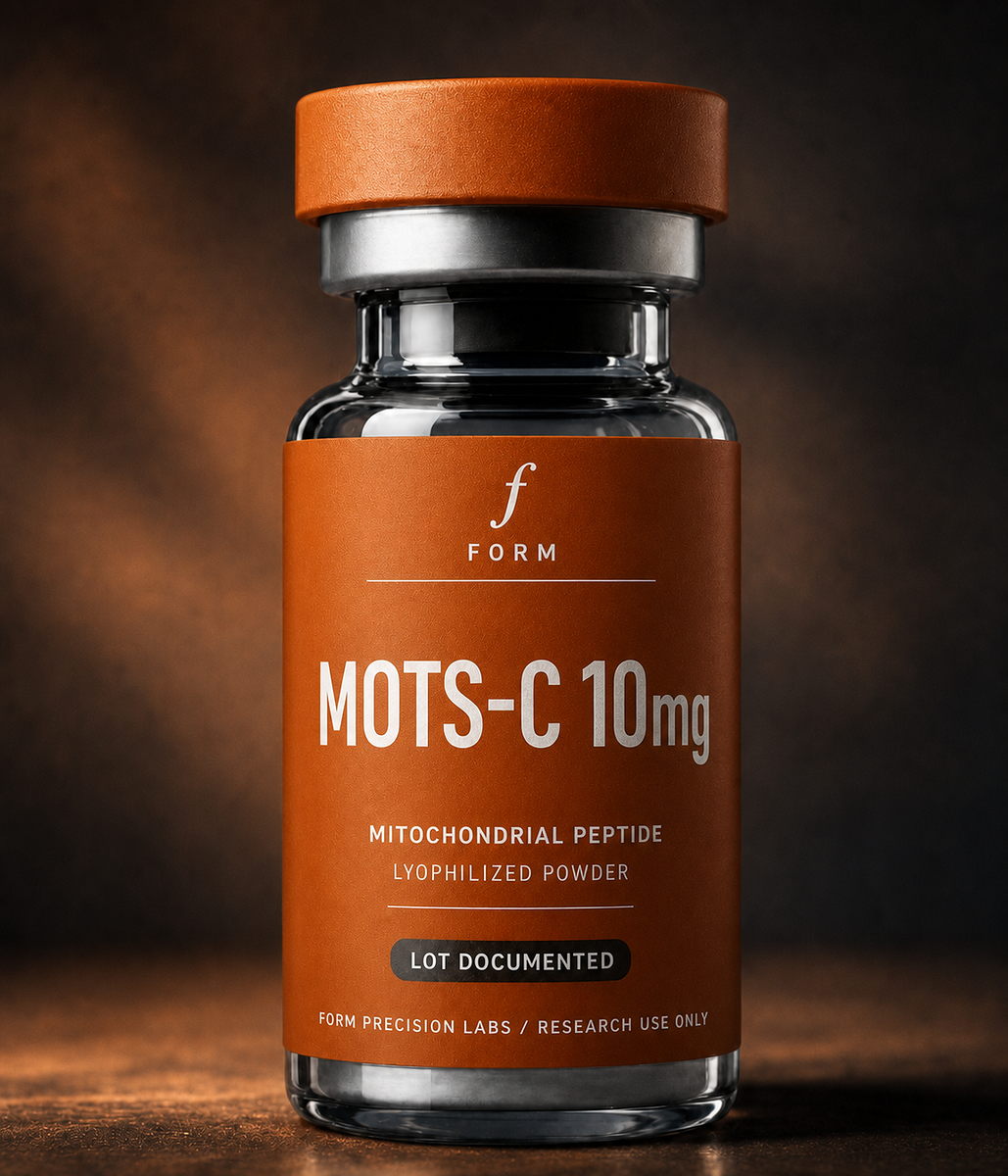
Form / material film360° studio loop
Hyperreal material study08.1 sec / seamless
FORM / LOT RECORD
Linked before ordering.
- 01
- Identity
- 02
- Method
- 03
- Lot match
Muscle & Performance
Available for research
Lot-documented reference material
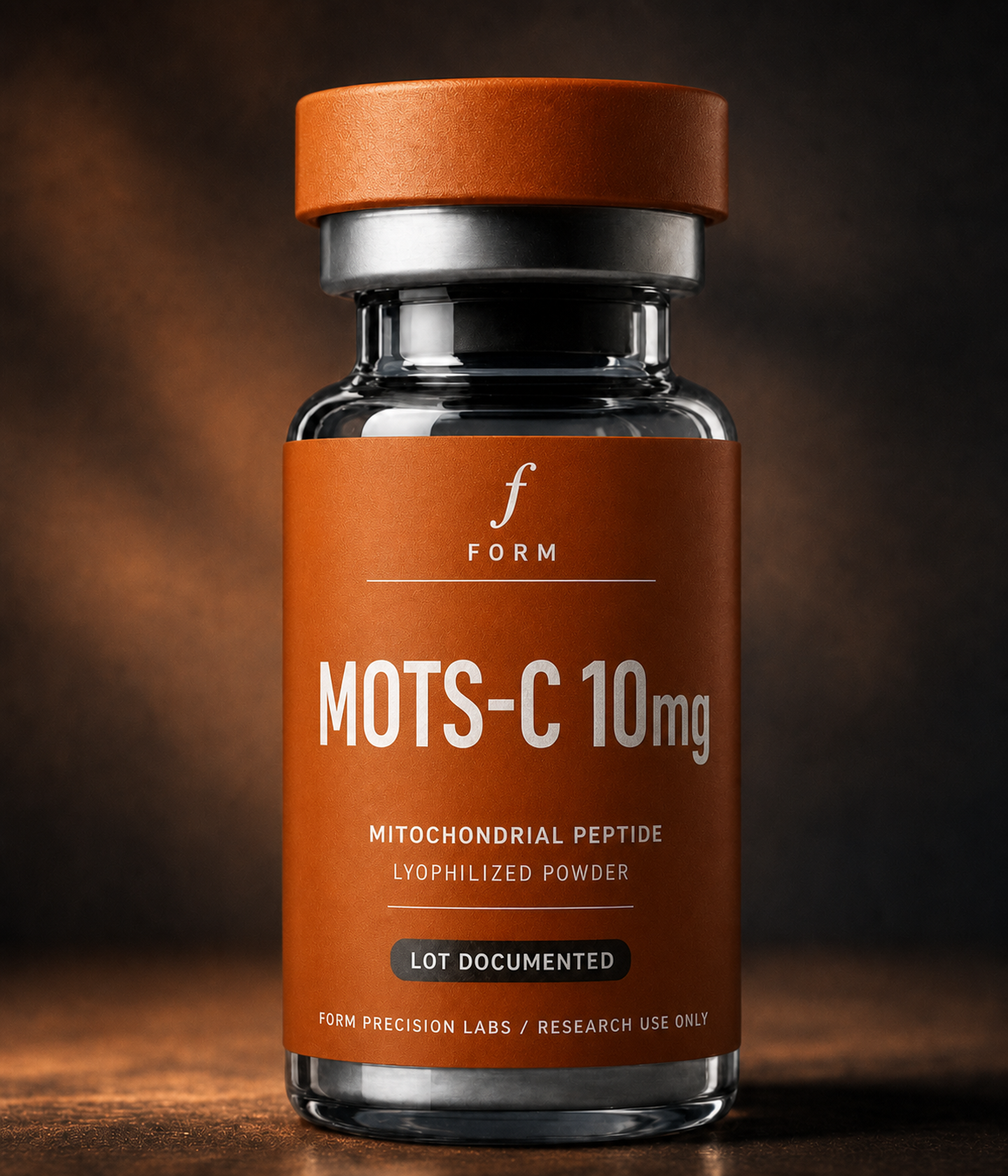
MOTS-C
A synthetic peptide reference material backed by lot-specific identity and purity reporting.
99.53%
Reported purityCurrent lot DPS-7058391 · UPLC + mass spectrometry
View lot report →
$85
CoA available
One-time research orderNo subscription
10 mg
Free U.S. shipping · Freeze-dried · CoA available
Lab-reported identityUPLC & mass spectrometry
Lot matchedCoA available
Freeze-driedReference material
Research onlyQualified buyers
01Material details
Review the identity, current reported result, methods, storage note, and document status in the material table below.
02Independent record
Open the independent report above to verify the values published on this page before placing a research order.
03Research-use requirements
For laboratory research only. Never for use in people or animals. Obtain and review the supplier-issued SDS before handling or storage.
04Potential human benefits
- Metabolic flexibilityMOTS-C activates stress-adaptation pathways including AMPK, helping cells shift fuel use when energy demand rises. That mechanism is compelling for insulin-resistance and metabolic-health research.
- Glucose regulationPreclinical work links MOTS-C signaling to improved glucose handling and insulin sensitivity, while human studies show that circulating MOTS-C responds to exercise and metabolic stress.
- Physical capacity + healthy agingIn older mice, administered MOTS-C improved strength, gait, and exercise capacity. Human benefit has not yet been demonstrated, but the exercise-linked biology makes it a high-interest longevity target.
The Form standard
Built to be examined,
not assumed.
Every listing keeps the material, current record, and research boundary in one clear review path.
Review the stated analytical methods before ordering.
Presented as a laboratory reference material.
Research only. Never for use in people or animals.
Potential human relevance
A mitochondrial signal
that behaves like exercise.
MOTS-C is encoded within mitochondrial DNA and helps cells respond to energetic stress. Human studies show that exercise raises naturally occurring MOTS-C in muscle and circulation, while animal studies suggest administered MOTS-C can improve metabolic flexibility, physical capacity, and age-related decline.
Metabolic flexibility
MOTS-C activates stress-adaptation pathways including AMPK, helping cells shift fuel use when energy demand rises. That mechanism is compelling for insulin-resistance and metabolic-health research.
Glucose regulation
Preclinical work links MOTS-C signaling to improved glucose handling and insulin sensitivity, while human studies show that circulating MOTS-C responds to exercise and metabolic stress.
Physical capacity + healthy aging
In older mice, administered MOTS-C improved strength, gait, and exercise capacity. Human benefit has not yet been demonstrated, but the exercise-linked biology makes it a high-interest longevity target.
How the potential connects to the biology
Why it may matter
Mitochondrial-to-nuclear stress signaling and metabolic adaptation pathways.
What studies track
Gene expression, oxygen consumption, AMPK-linked signaling, substrate use, and cellular stress response.
How strong is the evidence?
Human exercise-response evidence for endogenous MOTS-C; administered-peptide benefits remain preclinical.
What remains unknown: Humans in the cited work produced endogenous MOTS-C in response to exercise; they were not treated with MOTS-C. Performance and healthy-aging benefits remain preclinical hypotheses.
Material details
The essentials.
The current lot report lists the material identity, purity result, and test methods in one place.
| CAS number | 1627580-64-6 |
|---|---|
| Molecular formula | C101H152N28O22S2 |
| Molecular weight | Approximately 2174.64 g/mol |
| Lot result | 99.53% purity; white lyophilized powder |
| Tested by | Horizon Analytical; lot DPS-7058391; UPLC and mass spectrometry |
| Storage | Not stated on the current lot CoA. Obtain and follow the supplier-issued SDS before handling or storage. |
| Lab records | Current lot CoA (PDF) · Request supplier-issued SDS |
SDS status: not currently posted. Request and review the supplier SDS before handling or storage; this page and CoA do not replace it.
Made for research
For in-vitro lab research, method development, and identity testing by qualified research customers.
Proof by lot
The available CoA is tied to this material and lot. Open it above or visit the CoA library.
Clear limits
For laboratory research only. Never for use in people or animals.
Before you order
By ordering, you confirm qualified research-only use.