The available report is connected directly to the listing.
Form / material film360° studio loop
Hyperreal material study08.1 sec / seamless
FORM / LOT RECORD
Linked before ordering.
- 01
- Identity
- 02
- Method
- 03
- Lot match
Recovery & Healing
Available for research
Lot-documented reference material
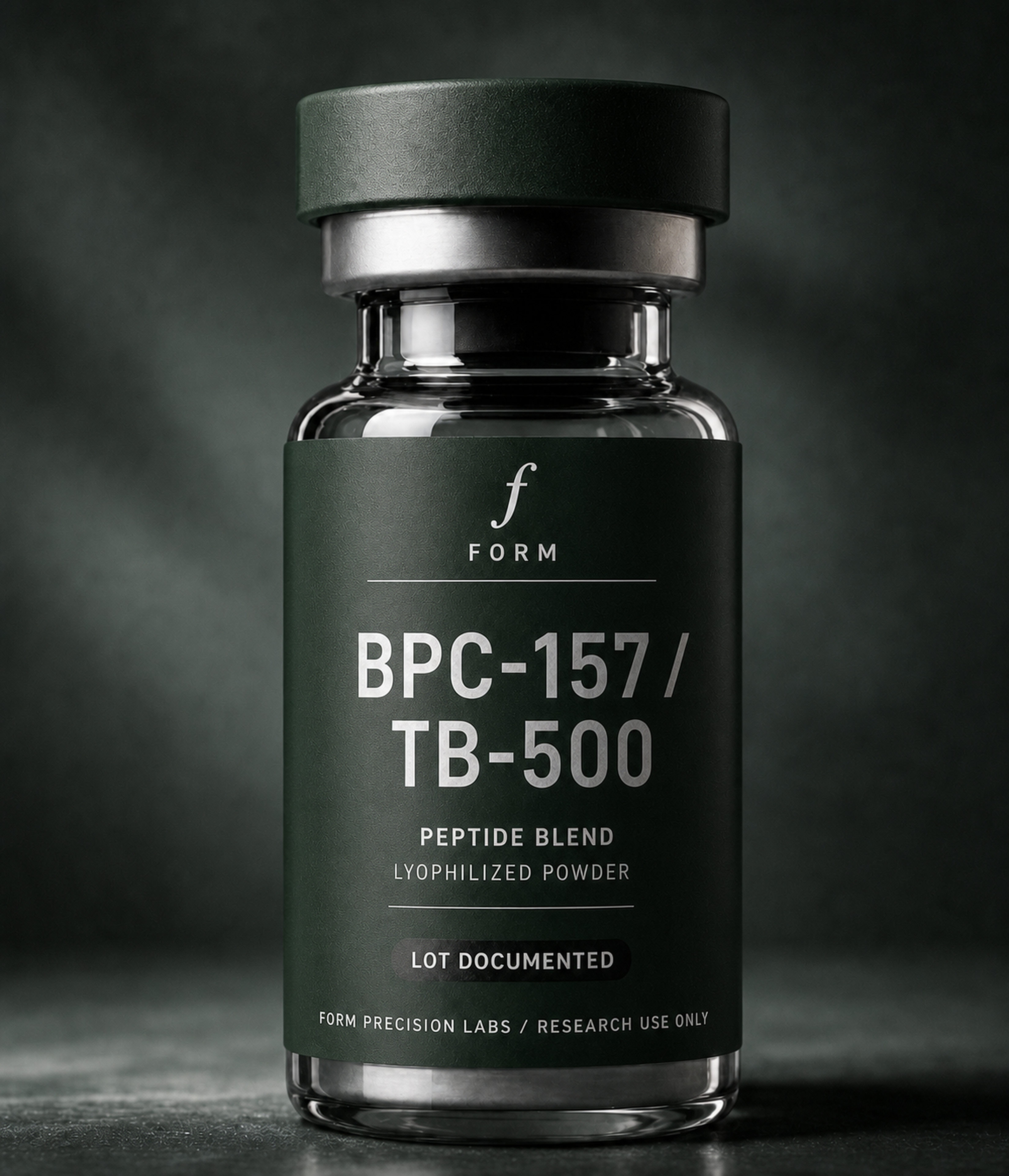
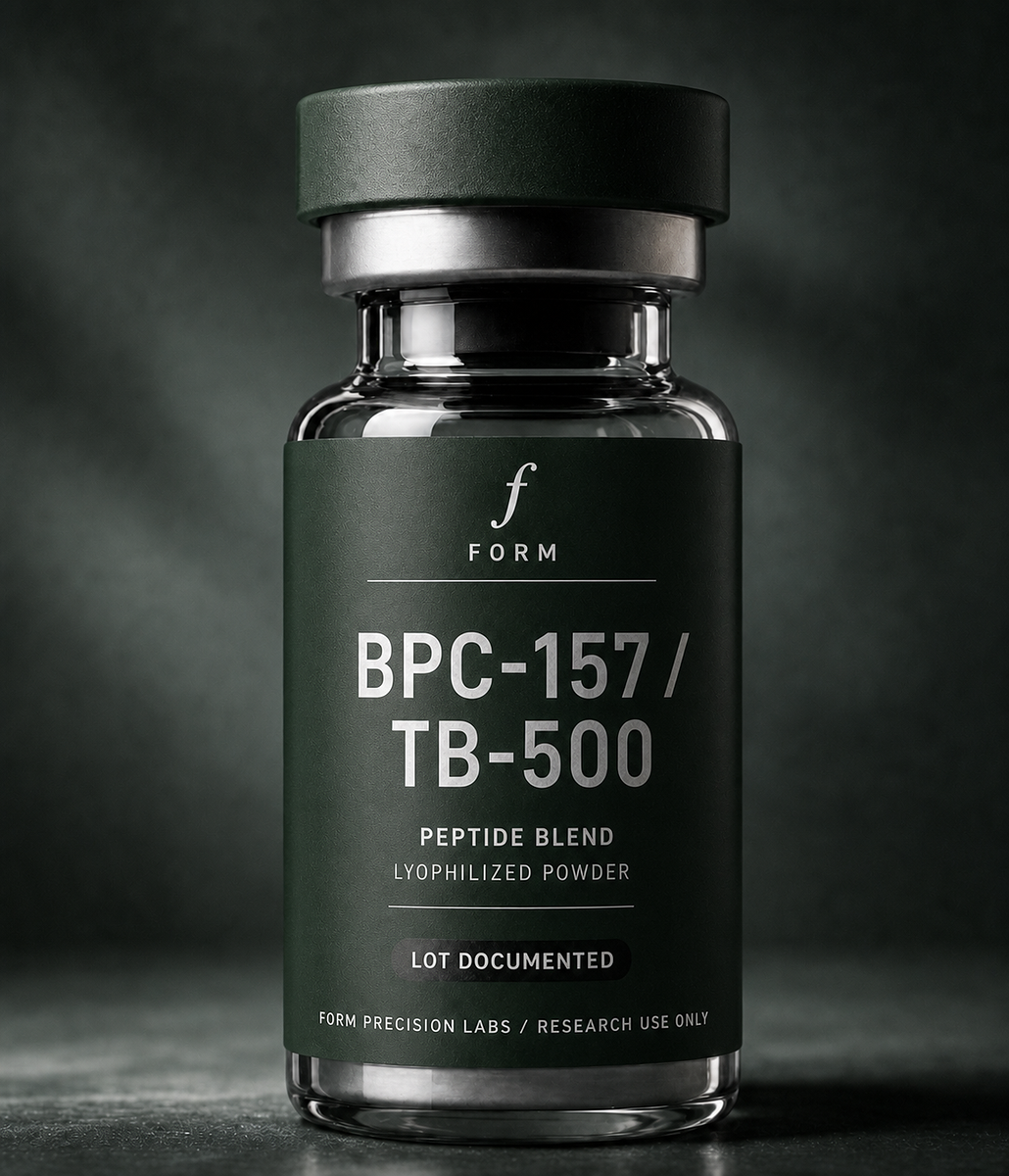
BPC-157 / TB-500 10 mg
A precisely documented two-component peptide blend, prepared for controlled laboratory study and analytical comparison.
99.64%
Average reported purityCurrent lot HVY-ACE26-BPC/TB-10/10 · HPLC/UV + mass spectrometry
View lot report →
$65
CoA available
One-time research orderNo subscription
Free U.S. shipping · Freeze-dried · CoA available
Lab-reported identityHPLC/UV & mass spectrometry
Lot matchedCoA available
Freeze-driedReference material
Research onlyQualified buyers
01Material details
Review the identity, current reported result, methods, storage note, and document status in the material table below.
02Independent record
Open the independent report above to verify the values published on this page before placing a research order.
03Research-use requirements
For laboratory research only. Never for use in people or animals. Obtain and review the supplier-issued SDS before handling or storage.
04Potential human benefits
- Tendon + ligament recovery potentialPreclinical BPC-157 research has reported changes in fibroblast activity, collagen organization, and blood-vessel signaling in poorly vascularized tissues such as tendons and ligaments.
- Muscle + wound repair pathwaysThymosin-beta-4-related signaling can support cell migration and actin remodeling, while both components are studied for angiogenesis and tissue-repair responses.
- Gut-lining resilienceBPC-157 originated from gastric-protein research and has shown mucosal-protection and repair signals in animal models, creating interest in intestinal barrier and ulcer research.
The Form standard
Built to be examined,
not assumed.
Every listing keeps the material, current record, and research boundary in one clear review path.
Review the stated analytical methods before ordering.
Presented as a laboratory reference material.
Research only. Never for use in people or animals.
Potential human relevance
A repair-focused combination
with wide preclinical appeal.
BPC-157 and thymosin-related pathways converge on cell migration, angiogenesis, collagen organization, and matrix remodeling. That creates compelling hypotheses for tendon, muscle, wound, and gut repair—but controlled human efficacy evidence is still minimal.
Tendon + ligament recovery potential
Preclinical BPC-157 research has reported changes in fibroblast activity, collagen organization, and blood-vessel signaling in poorly vascularized tissues such as tendons and ligaments.
Muscle + wound repair pathways
Thymosin-beta-4-related signaling can support cell migration and actin remodeling, while both components are studied for angiogenesis and tissue-repair responses.
Gut-lining resilience
BPC-157 originated from gastric-protein research and has shown mucosal-protection and repair signals in animal models, creating interest in intestinal barrier and ulcer research.
How the potential connects to the biology
Why it may matter
Cell-migration, extracellular-matrix turnover, angiogenesis, and injury-model signaling.
What studies track
Migration assays, tube formation, ERK-linked signaling, collagen deposition, and model-specific inflammatory markers.
How strong is the evidence?
Predominantly cell and animal evidence. Human BPC-157 data are limited to very small pilot and retrospective reports; the combination has not been clinically validated.
What remains unknown: Human efficacy has not been established for healing tendons, muscle, wounds, or the gut. The cited BPC-157 safety pilot included only two people, and no trial validates this combination.
Material details
The essentials.
A two-component peptide blend with component identities and lot results shown below.
| BPC-157 | CAS 137525-51-0; C62H98N16O22; approximately 1419.5 g/mol |
|---|---|
| Thymosin beta-4 | CAS 77591-33-4; C212H350N56O78S; approximately 4963 g/mol |
| Lot result | 99.64% average purity; white lyophilized powder |
| Tested by | Freedom Diagnostics; lot HVY-ACE26-BPC/TB-10/10; HPLC/UV and mass spectrometry |
| Storage | Not stated on the current lot CoA. Obtain and follow the supplier-issued SDS before handling or storage. |
| Lab records | Current lot CoA (PDF) · Request supplier-issued SDS |
SDS status: not currently posted. Request and review the supplier SDS before handling or storage; this page and CoA do not replace it.
Made for research
For in-vitro lab research, method development, and identity testing by qualified research customers.
Proof by lot
The available CoA is tied to this material and lot. Open it above or visit the CoA library.
Clear limits
For laboratory research only. Never for use in people or animals.
Before you order
By ordering, you confirm qualified research-only use.